




Marathon Runners: Foot Pain and Foot Orthotics
Video: What is the Best Running Shoe?
Dr. Huppin and Dr. Hale of the Foot and Ankle Center of Washington have special interest and expertise in working with marathon runners. We are the top referral center in the Seattle area for marathon runners with foot, ankle and leg problems. We treat marathoners every week of the year, but  see a significant increase in the number of marathoners we treat in the months leading up to the Seattle Marathon in November and the Seattle Rock’n’Roll Marathon in June.
Running marathons puts tremendous force on the feet which causes most of the foot, ankle and leg problems we treat. In some people, this is due to abnormal biomechanics of the feet. For some it is because they weigh too much. For most, however, it is simply overuse. With marathoners, problems occur due to the repetitive pounding over the months of training. On a ten-mile run, your feet strike 15,000 times at a force three to four times your body weight. Even with perfect foot mechanics, injuries are common with this much stress.
Come See Us Before You Begin Your Marathon Training
Whether you’re gearing up for your first or your fortieth marathon, come to the Foot and Ankle Center in Seattle for a complete pre-marathon lower extremity evaluation prior to starting training. Be sure to bring your running shoes, any orthotics or arch supports and some running shorts for a short treadmill run. We will evaluate your biomechanics, gait, injury history, foot structure and shoes. After the evaluation, we will recommend treatment and protocols for injury-free training and marathon running.
Come See Us ASAP for Injury Treatment During Training
If you are already in training and have foot, ankle, knee or leg pain, make an appointment to see us right away in our Seattle clinic. When you call, tell our receptionist that you’re training for a marathon and we will try to get you in right away so we can help you avoid an interruption to your training schedule.
Here are some of the most common foot problems we see and treat in marathon runners:
- Plantar Fasciitis
- Achilles Tendonitis
- Knee Pain
- Posterior Tibial
- Tendonitis
- Ball-of-Foot Pain
- Sesamoiditis
- Stress Fractures
- Black Toenail
Orthotics to Prevent Marathon Injuries
Custom orthotics can help prevent injuries by decreasing the extreme force on your feet while in marathon training. The type of orthotic that might be used for a marathoner depends on the biomechanics, foot shape and pathology of a particular runner. Some marathoners do best with a light weight and more cushioned orthotic. Others require more support to eliminate the forces that lead to injury. In most cases, orthotics for marathoners should conform almost perfectly to the arch of the foot. These are called total contact orthotics and act to spread the force over the entire bottom surface of the foot in order to prevent excessive pressure on any one part of the foot.
Orthotic Cushioning for Runners
Studies show that adding additional cushioning to an orthotic can significantly decrease impact forces on the foot and leg in runners. Regardless of the type of orthotic we prescribe for your specific problem, if you plan on using the orthotic for running, especially marathons, we will add some very specific cushioning modifications designed to decrease force on your lower extremity. Because of the extreme force marathon running exerts on the feet, even those with relatively normal foot mechanics may benefit from custom orthotics.
Prefabricated Orthotics for Marathoners and Tri-athletes
At the very least, marathoners should be wearing high-quality over-the-counter arch supports. We can help you determine which type of support is best for you. If you think you might be a candidate for custom orthotics, come see us as soon as possible. You will need time to adjust to new orthotics and we will work with you to develop a break-in schedule. Read more here about why orthotics from Dr. Huppin and Dr. Hale work better.
Last Minute Marathon Training Pain and Injuries
We routinely treat several patients per day in the weeks leading up to major events like the Seattle Rock’n’Roll Marathon for foot, ankle, knee and leg pain. Most of the patients we see are training for the half marathon and the most common complaints are plantar fasciitis and shin splints. With just a few weeks of training left, we don’t want to make any major changes to your routine. For instance, there is not enough time to prescribe a pair of custom foot orthotics this close to a marathon because there is not enough time to break them in without risking injury.
How Close to a Marathon Can You Get New Orthotics?
If a marathoner requires custom orthotics, they should have at least six weeks to break them in them before a marathon. However, most of the problems we see are caused by a lack of proper support. For patients that do not regularly run the distances they are now, this leads to excessive force on their feet and problems including:
- Plantar fasciitis and other heel and arch pain
- Ball of foot pain including neuroma, callus and metatarsalgia
- Runners knee
- Shin splints and other leg pain and tendonitis problems.
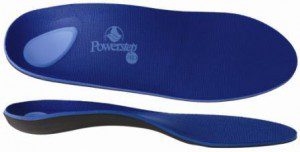 We have been able to take care of many of these issues with some shoe changes and high-quality over-the-counter arch supports. The OTC arch support we recommend for runners is the Powerstep Medical Grade Orthotic. These offer plenty of support while incorporating the cushioning that runners need. These OTC supports accompany appropriate treatment for the specific condition you have. Our goal is to allow you to participate in the marathon, if at all possible.
Once the marathon is complete, then we will develop a long-term treatment and prevention plan. We also recommend you see a sports medicine-oriented podiatrist if you experience any lower extremity pain while training for a marathon. It’s best to seek treatment as soon as possible and, even if it is the day before a marathon, a good podiatrist can help you decrease pain and prevent further injury.
Tip for Beginning Runners
If you are running your first race, please make an appointment to see us in our Seattle Foot and Ankle Clinic for a pre-marathon evaluation before you get too far into your training. Be sure to bring your running shoes and any arch supports or orthotics you are using now or have used in the past.
Recommended Marathon Training Books
If you’re new to marathon running, check out these very well-reviewed guides to marathon training:
The Nonrunner’s Marathon Guide for Women: Get Off Your Butt and On with Your Training
Marathon: The Ultimate Training Guide: Advice, Plans, and Programs for Half and Full Marathons
How Many Marathons and Triathlons Can You Run Each Year?
We treat a lot of marathoners and triathletes in our Seattle Foot and Ankle Clinic. Many marathoners run multiple races per year, yet are surprised when they experience an injury. We try to emphasize to everyone who runs marathons and triathlons to be aware of how many races their bodies can handle without injury.
When participating in these extreme events, you need to give your body adequate time to train and to heal. While there will be differences from person to person, simply physiology gives us guidelines to how many of these races you can reasonably run each year without dramatically increasing your risk of injury. Here are some things to consider:
When is it Safe to Start Training for Another Marathon?
First, realize that it takes at least four months to effectively train for a marathon and six months to train for an Ironman. Next, be aware that recovery also takes time. You should wait at least one day for each mile you run in a marathon before you start training again. For a triathlon, you should take four to five days off for every hour of the triathlon.
This means you should not start training for another marathon for at least four weeks and about six weeks after a 12 hour triathlon. There is no way to safely speed up this process. You must give your body time to heal or you WILL be injured. If you go back to training too soon, it’s not a matter of whether you will have an injury, but when you will have an injury.
Given that there are only 12 months in a year, when you combine both training and recovery time, you have time for a maximum of safely running two marathons per year or one Ironman. Any more than that and you are facing a near-certain injury.
Seattle Marathons and Triathlons
Here are links to some of the top Seattle marathon and triathlon events:
Come See Us to Discuss Your Marathon Training
We routinely see marathon and half marathon runners from the beginner to the experienced. Come into our conveniently located clinic near downtown Seattle. We are on Broadway near Swedish Hospital. Dr. Hale and Dr. Huppin are ready to help you with your marathon running aches and pains to help you train more effectively and without injury. For an appointment, schedule online here or call us at (206) 344-3808.
References in the Medical Literature
- K O’Leary, et al, “Effect of Cushioned Insoles on Impact Forces During Running,” Journal of American Podiatric Medical Association, 98(1): 36–41 (2008).
- DF Murphy, “Efficacy of plantar loading parameters during gait in terms of reliability, variability, effect of gender and relationship between contact area and plantar pressure,” Foot & Ankle International, 26(2):171-9 (2005).
- SA Bus, “Ground reaction forces and kinematics in distance running in older-aged men,” Medicine & Science in Sports & Exercise, 35(7):1167-75 (2003).
- Kelvin Tsai, Oxidative DNA damage in human peripheral leukocytes induced by massive aerobic exercise. Science Direct. 2001
